They · Products and machine intelligence
Know what it needs. Keep it useful.
A product belongs to a web of parts, suppliers, people and services. A proposed virtual twin could connect that knowledge throughout its working life; an authorised agent could help act on it.
Follow the story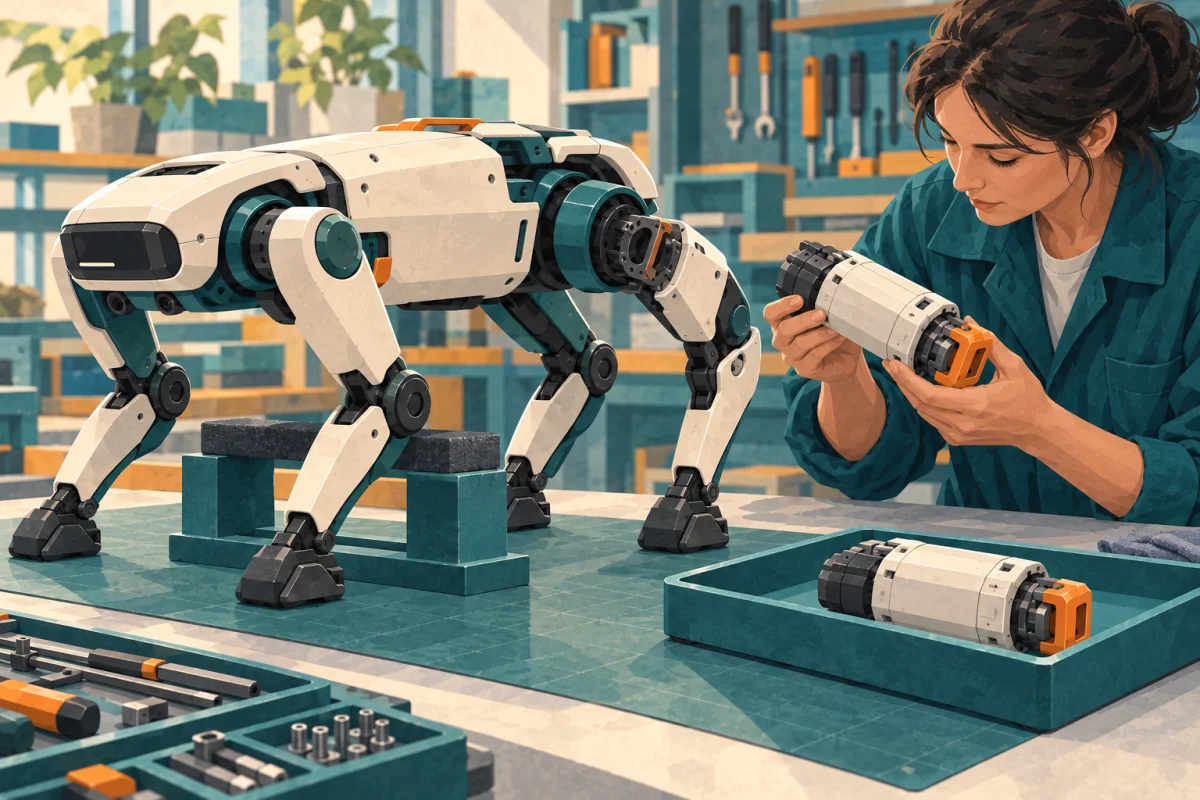
The product perspective
Know a product throughout its working life.
The intended virtual twin would connect a product’s configuration and documentation with its parts, suppliers, use and service history. The physical product, its twin and an acting agent are distinct: a product can have a twin without being intelligent or having an agent.
The design could give robots, drones and compute equipment their own records. An agent may eventually help find information or coordinate work only within the permissions it has been given; these connected services still need qualification.
Explore product twinsThey · The product · Fictional story
Know what it needs. Act within permission.
The physical PICO-D1-U01, its twin and an authorised agent are distinct. The parts record identifies Harbor Motion as the original source of the left-hind PICO-D1-LH-A01, revision R1.
This dog-robot story is separate from the wheeled-cleaner illustrations below. A sensor anomaly opens CASE-LH-01. Pico D1 stops the affected activity and reports uncertainty; it does not diagnose the fault merely by opening the case. The agent examines permitted unit history, compatible-part evidence and any current Harbor Motion offer. A similar-looking part, an old price or an unavailable listing proves neither fit nor stock. A person approves or a previously granted bounded mandate permits the exact expenditure and booking. Rejection or missing authority stops the consequential action. A supplier accepts an eligible order and a service partner confirms capacity. The robot travels only if the owner permits it and route and operating safety are established; otherwise a person arranges recovery. The provider checks the work and the customer or delegate accepts or disputes it. Only accepted, attributable evidence updates the installed part and service history.Who and what in this fictional story
Follow the complete journey
Detect and pause
Check the chain
Request authority
Arrange service safely
Verify and update
Missing fit evidence, unavailable stock, denied spending or unsafe travel stops that branch. The illustration proves no diagnosis, order, travel or completed repair.
A separate illustration
A separate household-product journey.
The following chapters retain the wheeled cleaner and its wrist-actuator example, separate from Pico D1’s dog-robot story.
01
Know which product you mean.
Distinguish the model, chosen configuration and individual unit. Record the owner and operator, installed parts and applicable rights. A virtual twin describes the product; it is not the product or a permission to act.
Mira’s robot has a particular wrist revision and service history. A similar-looking part in a catalogue is not automatically a compatible replacement.
Explore product identity and evidence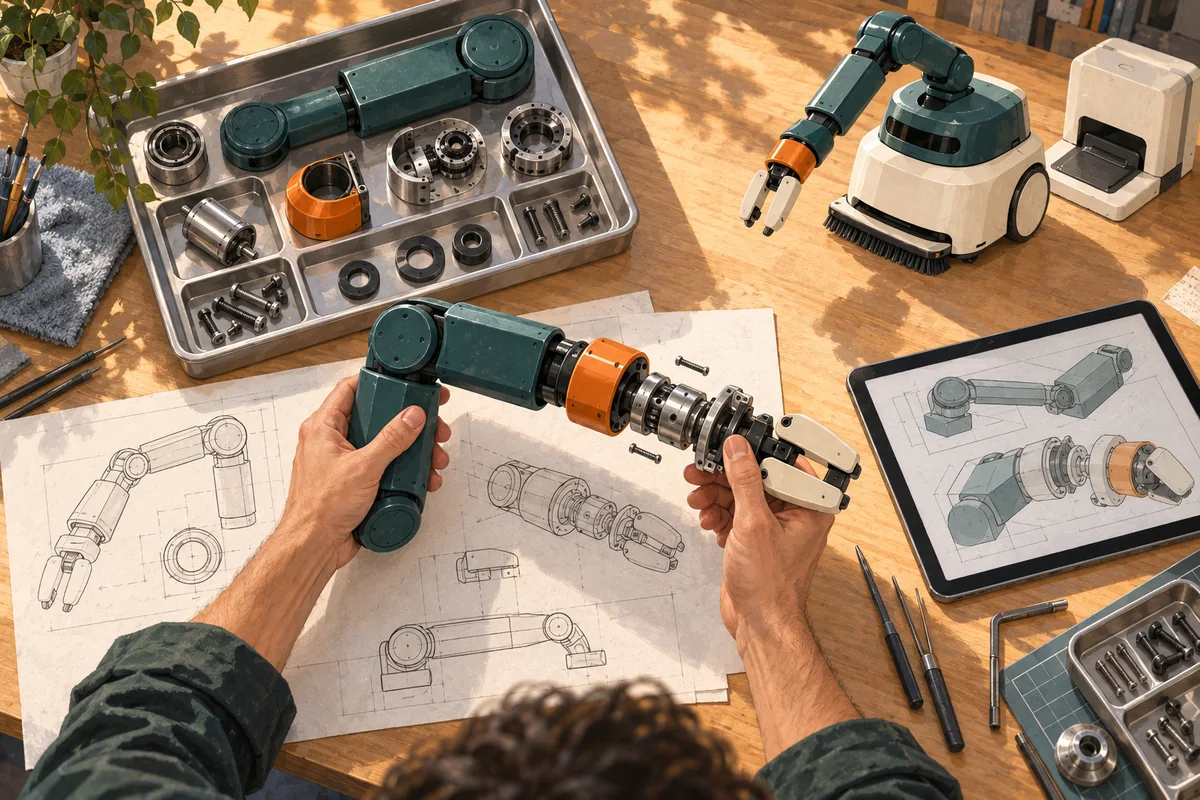
02
Understand what it depends on.
Parts, suppliers, energy, software, connectivity and maintenance make useful operation possible. Keep versions, compatibility claims and replacement options connected to their sources.
The wrist actuator comes from a component supplier; its firmware and mechanical interface both matter. An agent preserves missing evidence rather than guessing a fit.
Follow the upstream supply chain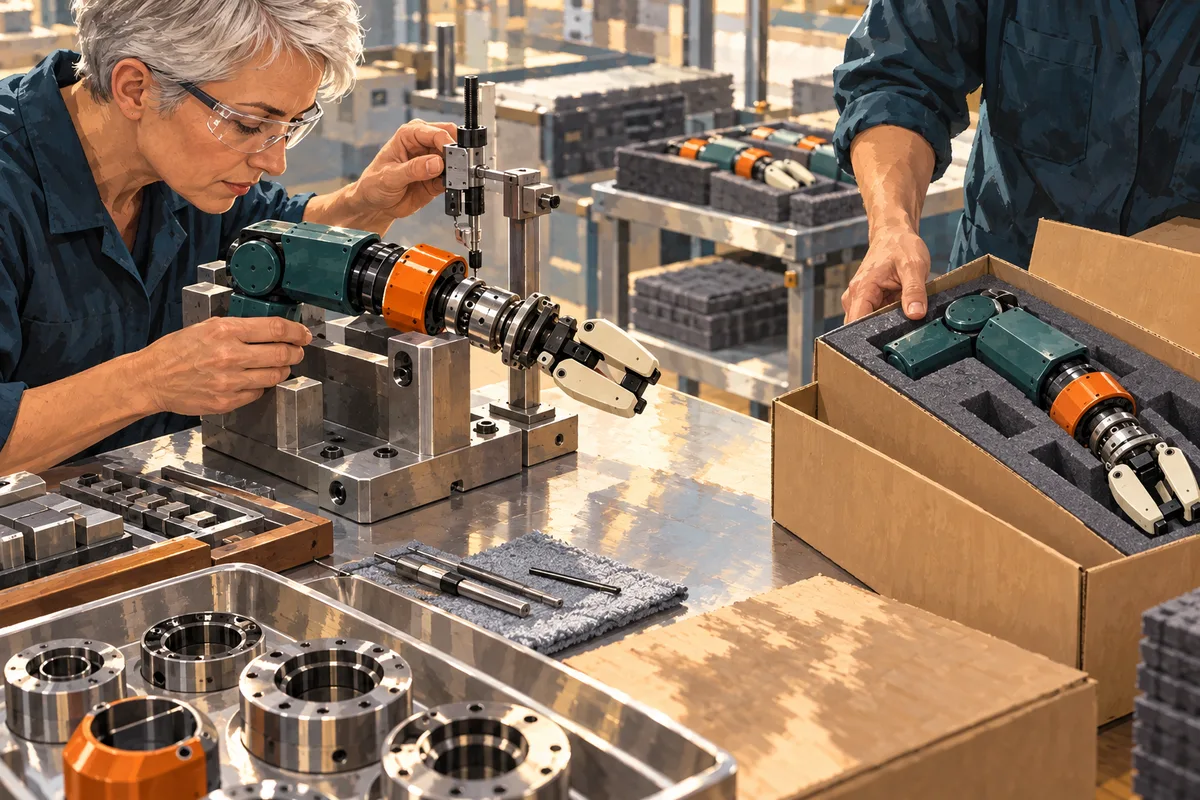
03
Follow it into use.
Configuration, production or existing stock, delivery, installation and acceptance describe different stages. The installed configuration changes only when the relevant work has been checked and accepted.
The maker supplies Mira’s agreed robot and dock. Onboarding establishes its operating limits and support arrangements, without giving it unrestricted access to the household.
Inspect the records of fulfilment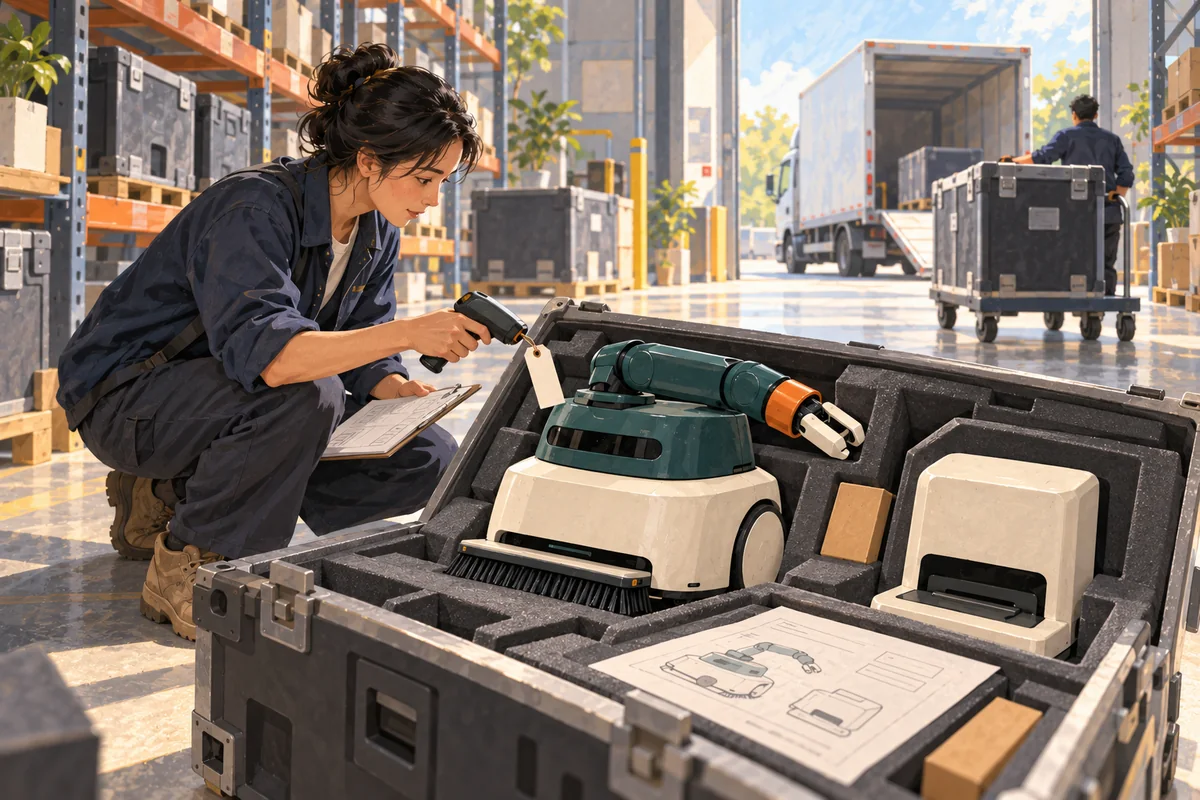
04
Respond to a need with evidence.
A sensor anomaly starts an investigation. The robot can stop the affected action, report uncertainty and ask for help. Its agent checks compatible parts, service availability and the scope of its authority before proposing action.
A suspected wrist fault leads to a replacement proposal. Incompatible parts, unavailable stock or rejected expenditure stop that proposal. Travel is allowed only if permitted and safe; a technician verifies repair before normal use resumes.
Try the separate AX-14 repair exercise
05
Prepare for what comes next.
Upgrade, transfer, reuse and retirement have their own responsibilities. Preserve relevant service history while limiting access to the previous owner’s personal information.
Mira considers an upgrade against its cost and benefit. The old unit may be repaired, transferred or recovered under applicable terms. An upgrade is a choice, not an assumed entitlement.
Explore upgrade and exit terms06
Connect capabilities without losing control.
Markets brings providers and needs together. The seven products contribute specialised capabilities; OFN describes economic receipts. SPECTRE explains the proposed underlying protocols.
The robot’s agent can inspect an offer through structured interfaces while Mira uses understandable screens. Both encounter the same commitments. A passive product can have a twin without having an acting agent.
Explore machine participation and integrationApp evidence and implementation scope
This illustrated journey is a design. The retained machine exercises test local boundaries; they do not connect a robot, issue credentials or execute real purchases.
Inspect capabilities and qualificationOne connected experience. Different perspectives.
Me follows the individual’s life and capabilities. We follows the organisation’s primary value chain. They follows the product’s upstream dependencies, downstream relationships and working life. The seven products and OFN support all three; Markets brings them together.
Pico’s dog-robot story connects these perspectives. The separate household-cleaner example and other fictional cases retain their own identities and records.
Earlier they bookmarks
Detailed examples and explanations now have their own page. These links also work without JavaScript.
- app features · open its explanation
- app features title · open its explanation
- participant direction · open its explanation
- participant they direction title · open its explanation
- participant objectives · open its explanation
- participant they objectives title · open its explanation
- machine case · open its explanation
- machine case title · open its explanation
- participant strategies · open its explanation
- participant they strategies title · open its explanation
- participant they apu title · open its explanation
- participant they thecircle title · open its explanation
- participant they realityfutures title · open its explanation
- participant they agentz title · open its explanation
- participant they nexus cortex title · open its explanation
- participant they liquid title · open its explanation
- participant they murmur title · open its explanation
- workers · open its explanation
- agents · open its explanation
- participation · open its explanation
- participation title · open its explanation
- workers title · open its explanation
- contribution · open its explanation
- contribution title · open its explanation
- substrate work · open its explanation
- substrate work title · open its explanation
- compute · open its explanation
- storage · open its explanation
- transport · open its explanation
- transport title · open its explanation
- node · open its explanation
- layer 1 · open its explanation
- monetary protocols · open its explanation
- layer 1 title · open its explanation
- protocols · open its explanation
- protocols title · open its explanation
- locations · open its explanation
- locations title · open its explanation
- markets · open its explanation
- markets title · open its explanation
- soresfi · open its explanation
- economy · open its explanation
- soresfi title · open its explanation
- integration · open its explanation
- integration title · open its explanation
- model · open its explanation
- experience title · open its explanation
- model detail · open its explanation
- permissions · open its explanation
- permissions title · open its explanation
- capabilities · open its explanation
- capabilities title · open its explanation
- development · open its explanation
- development title · open its explanation
- ending title · open its explanation